FREE UK SHIPPING · 60-DAY MONEY-BACK GUARANTEE ON EVERY ORDER
Home › Trending › Coffee

You’ve checked every label in your cupboard. Except the coffee.

A cup of black coffee seen from above on a plain surface

You scan every product you buy. Organic, free range, no pesticides, what’s in the oat milk, what goes in the kids’ breakfast. You’ve done it so long you don’t notice.

Then you scoop the coffee.

Roast date. Sometimes an origin. A paragraph on tasting notes. Nothing about what’s inside the bean.

That isn’t a brand being cagey. Labelling law covers allergens and nutrition. It doesn’t reach mould, mycotoxins or pesticide residue in a roasted bean, so the information doesn’t exist to print.

Which makes the first thing you drink every morning the one thing in the house you’ve never checked.

Why coffee and not tinned tomatoes

Coffee is fermented, washed and dried before it’s ever sacked, and the mould that makes ochratoxin A can’t make the toxin below a water activity of 0.80. So the beans have to come off the drying yard under 12.5 per cent moisture and hold there, across an ocean. A meta-analysis of 36 studies found ochratoxin A in 53 per cent of the coffee tested.

UK law sets a maximum, five micrograms a kilo in roasted coffee, and requires nobody to test. The Food Standards Agency says the sampling rules are written for enforcement bodies, and a business tests if it wishes to.

Fifty-three per cent sounds alarming and isn’t. Where coffee has been measured at scale it comes in well under that limit. Nobody has measured the bag in your cupboard.


So we measured ours

That’s why we sent Balance to a laboratory.

P.H. s.r.l. in Florence, accredited by ACCREDIA, with no stake in the outcome. Here is its document, figure by figure.

Independent Laboratory
P.H. s.r.l. (TÜV SÜD Group)
ACCREDIA accredited · Lab No. 0069 L · Barberino Tavarnelle, Florence · Report 26-LA45200 · Sample received 13 August 2026 · Issued 21 August 2026
All clear
Moulds
< 9 CFU/g
Yeasts
< 9 CFU/g
Ochratoxin A
< 0.3 µg/kg
Aflatoxins B1, B2, G1, G2 and total
< 0.5 µg/kg
Lead
< 0.010 mg/kg
Cadmium
< 0.010 mg/kg
Arsenic
< 0.050 mg/kg
Pesticides, 600+ compounds screened
All clear
Every figure is the laboratory’s own. The less-than sign is its limit of quantification, and nothing was found above it.

Is that remarkable, or is it normal?

Fair question. Our column is one accredited report on our own beans. The middle is thousands of samples of ordinary roasted coffee, published and citable. None of the three is a safety failure. What separates them is that one is a measurement of the coffee you’d be drinking.

Balance
report 26-LA45200
Ordinary roasted coffee
published averages
Ochratoxin A measured< 0.3 µg/kg0.56 to 0.94 µg/kg mean, across 1,651 roasted samples
How often it is foundNot found above the method’s limit53% of samples positive, 36 studies, 3,182 samples
Share of the GB legal limit of 5.0 µg/kgUnder 6%11% to 19% at the EFSA mean
A report you can quote back at usYes. 26-LA45200, issued 21 August 2026No. Category averages only

Sources: EFSA CONTAM Panel, EFSA Journal 18(5):6113. Khaneghah et al., Fungal Biology 123(8):611-617. GB limit, assimilated Regulation 1881/2006.

R
Verified Customer
Balance Coffee customer

"I read an article about pesticides and mould in coffee. I don't want that! Searched online and found Balance"

You already do this everywhere else in the house. This is the one shelf where the information didn’t exist. Now it does.

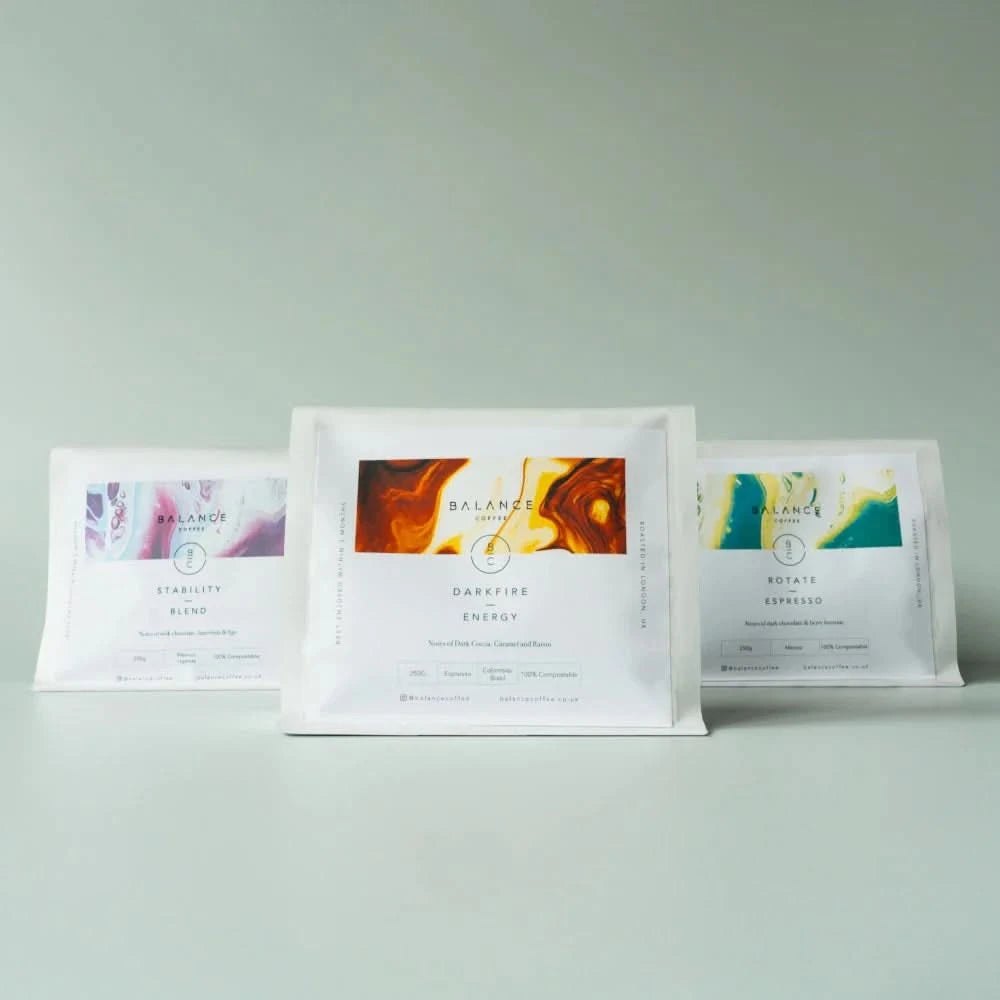
Three roasts, Stability, Rotate and Darkfire. 750g for £36.99, free UK delivery, 74p a cup. Full strength, nothing removed.

Stability, Rotate and Darkfire, 250g of each
See the Bestseller Bundle →

Sixty days. If it isn’t for you, email us and we’ll refund you. No form to fill in.